


A mystery party night is a themed interactive event built around a three-act narrative structure: introductions, investigation, and reveal. Knowing how to structure a mystery party night before you send a single invitation separates a gripping evening from a chaotic one. The standard format runs 2 to 3 hours, with each act serving a distinct purpose in the story. Get the structure right, and guests stay curious, engaged, and talking long after the night ends. Murder in Prague is built on exactly this kind of cinematic, story-driven framework.
How to structure your mystery party night: planning and preparation
Strong preparation is the single biggest factor in how well your event flows. Guests who arrive confused about their characters or unsure of the rules will drag the energy down before Act 1 even begins.
Choose your theme and game format first. The theme sets the tone for everything else: costumes, decor, food, and the type of clues you use. Classic settings include 1920s speakeasies, Victorian manor houses, and Cold War spy thrillers. Match the theme to your guest group's interests and your headcount. Smaller groups of 6 to 8 work well with tightly scripted formats, while larger groups of 12 or more benefit from formats that allow parallel conversations.
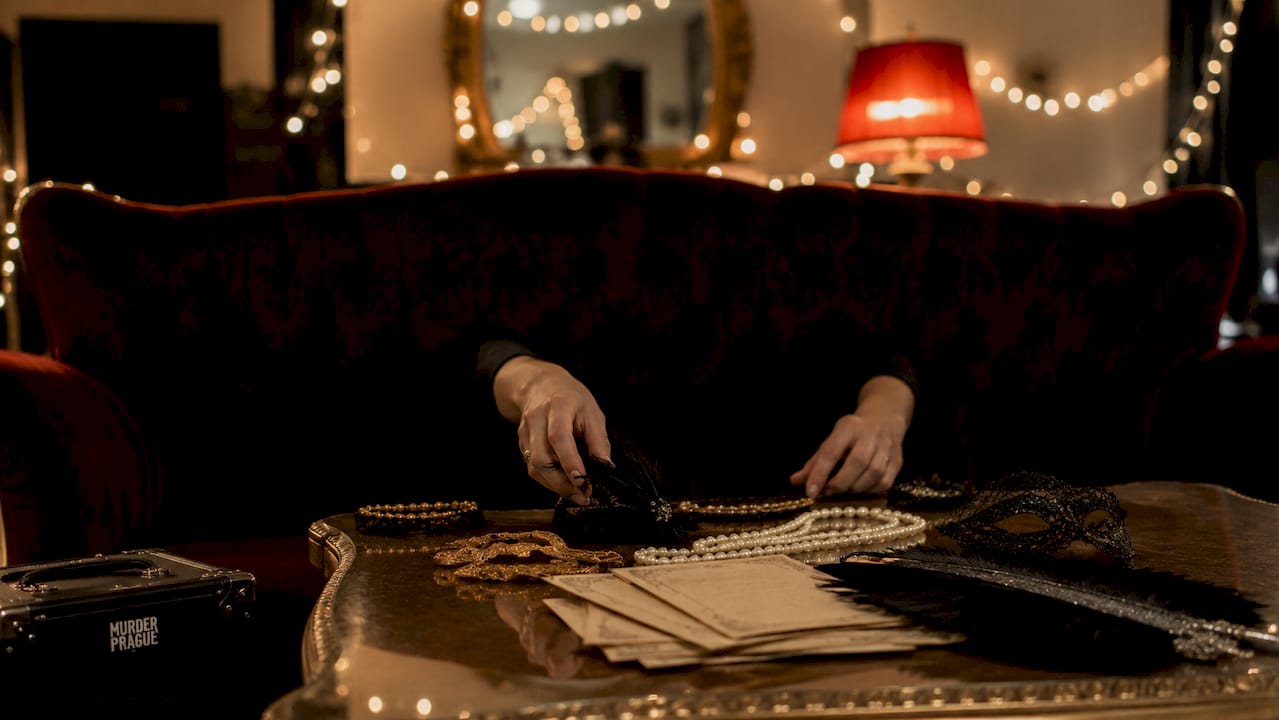
Send invitations 5 to 6 weeks before the event. Optimal invitation timing gives guests enough time to prepare costumes, read their character backgrounds, and get genuinely excited. Include character names, a brief personality description, and one or two costume suggestions in the invitation. Guests who feel prepared show up ready to play.
Prepare your host materials thoroughly. Host preparation involves three core tasks: printing and sealing character packets, reviewing the full reveal sequence, and building a backup plan for guest cancellations. If a guest drops out last minute, you need a plan to merge their role with another character or redistribute their clues. Sealed envelopes add a theatrical touch and prevent accidental spoilers.
Here is a pre-event checklist to keep you organized:
- Print and seal individual character booklets and clue packets
- Write a one-page host cheat sheet covering the full reveal sequence
- Prepare a "role merge" plan for up to two absent guests
- Confirm dietary restrictions and align food courses with clue timing
- Test any digital tools, apps, or audio equipment the night before
Pro Tip: Run a quick trial with a co-host or trusted friend before the event. Practice rounds reveal confusing clue wording and logistical snags that are easy to fix in advance but disruptive on the night.
What does the three-act structure look like in practice?
The three-act format gives your evening a clear dramatic shape. Each act has a defined purpose, a target duration, and a specific type of guest activity. Sticking to this structure prevents the two most common pacing failures: a slow start and a rushed ending.
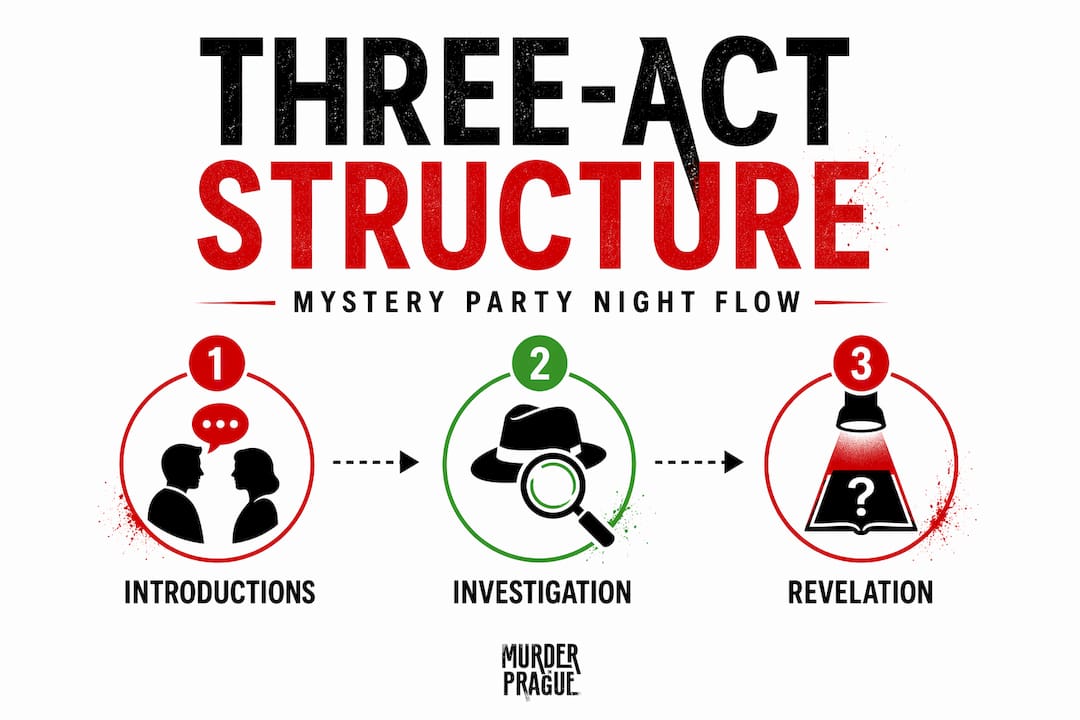
Act 1 is about orientation, not deduction. Guests need time to settle into their characters and understand who they are talking to. A simple icebreaker works well here: ask each character to introduce themselves in one or two sentences from their character's perspective. This warms up even the shyest guests without putting them on the spot.
Act 2 is the heart of the evening. Evidence drops every 15 to 20 minutes keep the investigation moving and give guests a fresh reason to change their theories. Think of each clue drop as a scene change in a film. Without them, conversations loop and energy fades. A well-timed clue drop resets the room.
Act 3 should feel like a courtroom moment. Give guests five minutes to write down their accusation and reasoning before you reveal the solution. Written accusations create accountability and make the reveal more dramatic. The host then reads the solution aloud, explaining each twist.
Integrating meals with the act structure adds theatrical rhythm. A three-course dinner pairs naturally with the three acts: starter with Act 1, main course during Act 2, and dessert with the reveal. Having a "butler" deliver clue envelopes between courses turns the meal itself into part of the story.
Pro Tip: Pre-write two or three prompt cards for Act 2 in case conversations stall. Phrases like "Your character just overheard something suspicious about [Name]" push the story forward without breaking immersion.
How does a host manage flow and keep guests engaged?
The host's job is to moderate, not to perform. Many first-time hosts make the mistake of becoming the center of attention. The real goal is to keep guests talking to each other.
Hosts act as impartial moderators and avoid giving specific hints unless a group is genuinely stuck. The fun of a mystery night comes from social deduction: guests piecing together information through conversation. If the host solves it for them, the payoff disappears.
Assigning characters based on personality is one of the most underrated hosting decisions. Talkative guests thrive in roles with heavy scripted interactions and multiple suspects to interrogate. Reserved guests do better in roles with fewer required conversations and more observational clues. Getting this match right means guests feel comfortable rather than pressured, and the whole room benefits.
Here are the most effective hosting strategies for managing flow:
- Watch for conversation loops: if two guests have been talking for more than five minutes without new information, redirect them to a third character
- Release a clue early if the room goes quiet for more than two minutes
- Use physical props, like a sealed envelope or a "telegram," to signal a new story beat
- Keep a printed timeline on a clipboard so you know exactly when each clue drops
- Stay near the edge of the room rather than at the center to observe without dominating
Pro Tip: Secondary nudge methods, like slipping a character a handwritten note that says "You just remembered something important," break repetitive loops and feel organic to the story rather than like a host intervention.
Creating an immersive atmosphere with costumes, decor, and food
Atmosphere is what separates a fun game night from a genuinely memorable event. The good news is that you do not need a big budget to create strong immersion.
Costumes should be encouraged but never mandatory. A simple dress code suggestion like "1920s detective aesthetic" or "Victorian formal" gives guests a clear direction without requiring elaborate outfits. Guests who dress up feel more committed to their characters. Guests who do not still feel welcome. That balance keeps participation high.
Decor ideas that work across multiple mystery themes:
- Dim lighting with candles or Edison bulbs to create a moody, cinematic feel
- A "crime scene" corner with caution tape, a chalk outline, and scattered "evidence" photos
- Era-appropriate tablecloths, centerpieces, and printed menus in the theme's font style
- A dedicated "clue board" where guests can pin their theories and evidence throughout the night
Food and drink pacing matters more than most hosts expect. Clue deliveries timed with meal courses add theatrical rhythm and give guests a natural reason to pause their conversations and refocus. Serve lighter appetizers during Act 1 so guests are not too full to talk. Save the main course for the height of Act 2, when energy is highest. Dessert lands perfectly during the reveal, giving guests something to enjoy while the solution unfolds.
Music and sound design are often overlooked. A low-volume jazz playlist for a 1920s theme or a ticking-clock ambient track for a thriller setting does more for immersion than most decorations. Keep the volume low enough that guests can hear each other clearly.
Key Takeaways
A well-structured mystery party night follows a clear three-act format with timed evidence drops, personality-matched character assignments, and atmosphere elements that support the story at every stage.

What we have learned from running mystery nights
Pacing is the variable that makes or breaks the evening. You can have a brilliant theme, gorgeous props, and a willing group of guests, and still lose the room if Act 2 drags. The most common mistake we see is hosts who wait too long between clue drops because they are worried about giving too much away too soon. The opposite problem is almost always worse. A room that goes quiet is a room that loses faith in the story.
The second lesson is about flexibility. No guest list survives contact with the actual event unchanged. Someone arrives late, someone else gets shy, and a character who seemed perfect on paper turns out to be too complex for the guest playing them. The hosts who handle this best are the ones who have read the full reveal sequence so thoroughly that they can adapt on the fly without losing the thread.
We have also found that assigning roles by personality rather than just preference makes a measurable difference in how much fun guests have. When a naturally reserved person is handed a role that requires them to dominate conversations, they shut down. When they get a role that lets them observe and deduce quietly, they often become the most engaged person in the room.
The final insight is simpler than it sounds: know your ending cold. The reveal is the emotional payoff for everything that came before it. Deliver it with confidence, explain the logic clearly, and give guests a moment to react before moving on. That moment of collective "aha" is what guests remember.
— Murder in Prague
Ready to host your own mystery night with Murder in Prague?
Planning a mystery party night is genuinely exciting once you have the right materials in hand. Murder in Prague takes the preparation work off your plate with a complete detective kit that includes physical evidence, a cinematic video storyline, and everything you need to run a gripping investigation from start to finish.


