

Mystery interactive experiences are defined by one thing movies can never offer: the moment you become part of the story. While a film rolls on without you, a mystery investigation pulls every person in the room into the action, forcing real decisions, real arguments, and real emotional stakes. That shift from passive viewer to active detective is exactly why mystery games beat movie nights when your group wants a night worth remembering. Research confirms that active debate drives memory, with 80–90% of groups citing it as the primary factor that makes their evening memorable versus passive media consumption. That single statistic explains everything.
Why mystery games beat movie nights for social connection
The core difference between a mystery investigation and a movie night is communication. A movie asks you to sit quietly. A mystery investigation demands that you talk, argue, accuse, and defend. Constant collaboration forces a level of communication that creates significantly stronger, longer-lasting personal memories than watching a film ever could.
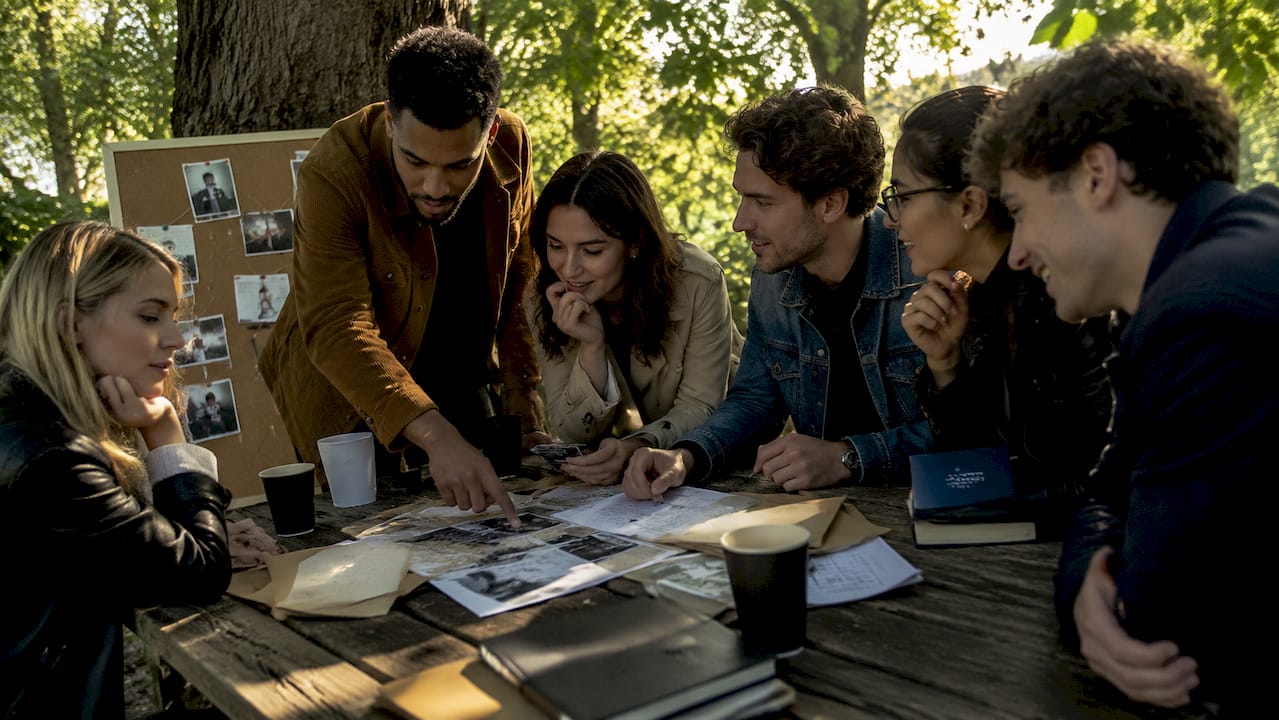
Groups that share responsibility for solving a case also share emotional stakes. When your theory about the suspect turns out to be wrong, everyone at the table feels it. When you crack a clue together, the celebration belongs to the whole group. That shared ownership of outcomes is something a movie simply cannot manufacture.
The contrast with passive entertainment is stark. A movie night produces one shared experience: watching the same images at the same time. A mystery investigation produces dozens of micro-moments, each one unique to your group's decisions. Structured interaction prevents the social stagnation that plagues unstructured party activities, keeping energy high from the first clue to the final accusation.
- Active roles: Every participant carries a piece of the puzzle, so no one fades into the background.
- Emotional stakes: Wrong theories and surprise reveals create genuine reactions, not polite laughter.
- Shared ownership: The group solves the case together, which means the victory belongs to everyone.
- Natural conversation: Debating suspects replaces the awkward silence that fills many social gatherings.
Pro Tip: Assign specific investigative roles at the start, such as evidence analyst, suspect interviewer, or timeline keeper. Defined responsibilities pull quieter participants into the conversation naturally and prevent one person from dominating the investigation.
Why active participation creates memories that last
The psychological reason mystery investigations stick in memory comes down to a concept researchers call shared agency. Shared agency transforms co-attendance into genuine team collaboration, building real rapport and dissolving the social awkwardness that often shows up at group gatherings. Couples and groups consistently report feeling like partners on the same team, with chemistry built through discovery rather than performance.
Active participation also triggers stronger memory encoding. Emotional investment and discovery lead to higher recall of events when participants are actively involved in story progression and problem-solving. The brain encodes experiences differently when the body is engaged, the emotions are running, and the outcome feels uncertain. A movie delivers a fixed emotional arc. A mystery investigation delivers a personal one.
The post-experience effect is equally powerful. Groups that finish a mystery investigation do not simply go home. They recount moments organically, reliving the wrong accusations, the surprise reveals, and the inside jokes that formed during play. That organic storytelling deepens memory retention in a way that discussing a film rarely does.
"After a mystery interactive experience, participants continue to discuss and share inside jokes about the investigation more than during actual play. Groups often recount moments organically, illustrating strong social and memory effects that film nights rarely produce."
How narrative structure sets mystery investigations apart from movies
The storytelling architecture of a mystery investigation is fundamentally different from a film. Movies deliver a fixed narrative. You consume it. You cannot change it. A mystery investigation gives every participant a role, a motivation, and a stake in the outcome. Players influence story progression through decisions and accusations, which means the story your group experiences is genuinely yours.
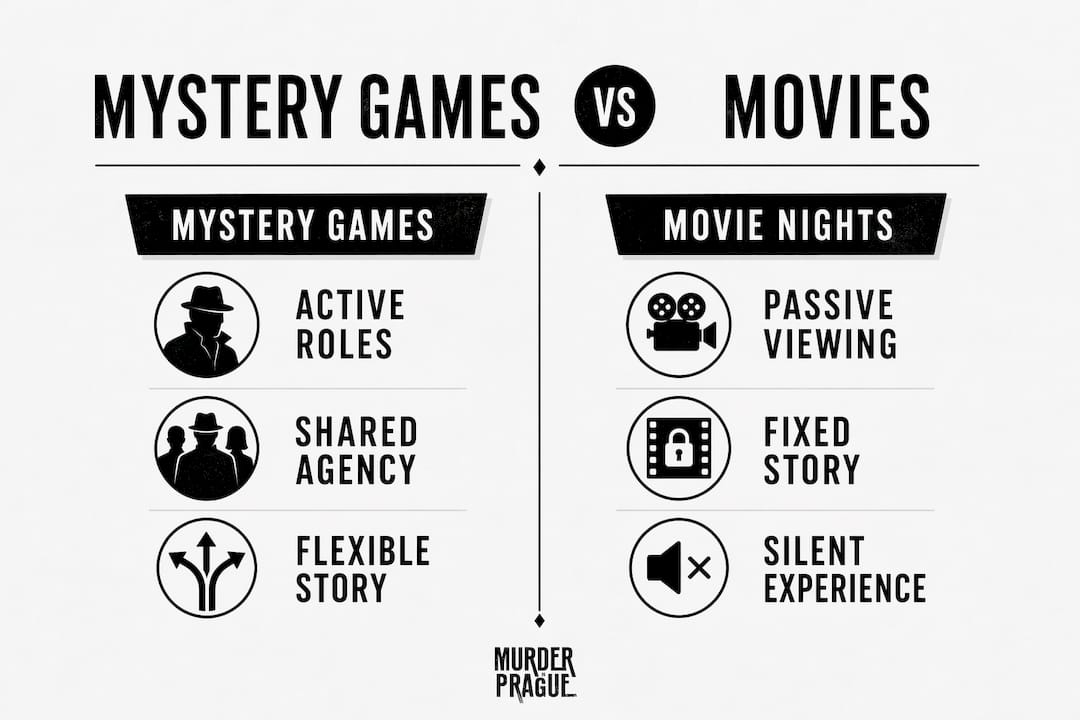
Mystery investigations also deliver a complete, contained story arc in a single evening. Players have defined roles and motivations that engage them deeply in one unique story, providing a strong emotional hook rather than the repetition or open-ended drift of many other social activities. That contained arc gives the evening a satisfying shape: a beginning, a rising tension, and a climax where someone names the killer.
The structural flexibility is equally important. Well-designed mystery experiences guide pacing, information flow, and player motivations without over-constraining participants. The structure prevents the evening from going flat, while the freedom within that structure lets each group's personality shape the night.
How to host a mystery investigation night that people talk about for months
Choosing the right experience for your group is the first decision that matters. Consider your group's tolerance for complexity. A couple on a date night wants tension and intimacy. A family with teenagers wants humor and clear roles. A group of true-crime fans wants depth, realistic evidence, and a story that respects their intelligence.
- Match the experience to your group. Read the premise carefully before committing. A film noir thriller set in Prague suits a different group than a lighthearted whodunit. The right fit means everyone stays engaged from the first scene.
- Set the scene before you start. Dim the lights, clear the table for evidence, and put phones away except for investigation tools. Physical atmosphere signals to everyone that this is not a casual evening. It is an event.
- Assign roles immediately. Hand out character files or investigative assignments before the first scene plays. The moment someone holds a suspect's dossier, they are invested. Do not skip this step.
- Manage pacing deliberately. Pause after major reveals to let the group debate. Do not rush to the next clue. The conversation between clues is where the real bonding happens.
- Protect the newbies. If someone has never done a mystery investigation before, pair them with an experienced participant for the first act. Confusion kills momentum. A quick orientation keeps everyone in the story.
Pro Tip: Encourage the group to create a shared "evidence board" on a table or wall using the physical materials included in the investigation kit. Physically arranging clues together produces more debate, more laughter, and more memorable moments than passing papers around individually.
Key Takeaways
Mystery interactive experiences create stronger social bonds and longer-lasting memories than movie nights because they demand active participation, shared decision-making, and genuine emotional investment from every person in the room.

What we've learned from watching groups solve mysteries together
Every time we watch a group sit down with a mystery investigation, the same thing happens. The first five minutes are tentative. People are polite. Then someone makes a bold accusation, someone else pushes back hard, and the room comes alive. That shift never gets old.
What strikes us most is how quickly the social dynamics change. Different groups produce distinct energies and inside stories, making each night genuinely unique. A couple who barely spoke during the first scene is finishing each other's sentences by the third. A group of friends who thought they knew each other well discovers that one of them is a ruthless interrogator with a talent for spotting lies.
Movie nights are comfortable. Mystery investigations are alive. The difference is not just entertainment format. It is the difference between watching something happen and making something happen. Groups that try an interactive investigation rarely go back to a passive evening without feeling like something is missing. That is not nostalgia. That is the effect of a night that actually mattered.
— Murder in Prague

Murder in Prague delivers exactly the kind of investigation night described throughout this article, at escape room intensity and a movie ticket price. The cinematic investigation experience is shot on location in Prague with an award-winning cast, blending Netflix-level video production with authentic physical evidence that arrives at your door. You watch the story unfold on screen, then pause to examine real bank records, hack into a victim's phone through a digital app, and argue over a suspect's handwritten notes spread across your table. The detective investigation kit gives your group the physical evidence that makes every accusation feel real. This is not background entertainment. It is the most memorable evening your group will have this year.
FAQ
Why do mystery investigations beat movie nights for groups?
Mystery investigations require active participation, debate, and shared decision-making, which create stronger memories and deeper social bonds than passive film watching. Groups report higher emotional impact and longer recall when they are involved in shaping the story's outcome.
What makes a mystery investigation night memorable?
The combination of defined roles, emotional stakes, and shared agency turns co-attendance into genuine collaboration. Organic post-experience storytelling, including inside jokes and shared recaps, extends the memory well beyond the evening itself.
How do mystery experiences help with social bonding on dates?
Solving a mystery together creates shared agency that builds real chemistry through discovery rather than performance. Couples consistently report feeling like genuine partners rather than two people trying to impress each other.
Are mystery investigations suitable for groups with no prior experience?
Yes. Well-designed mystery investigations guide pacing and provide clear roles, so first-timers stay engaged without feeling lost. Pairing a newcomer with a more confident participant during the first act keeps everyone in the story from the start.
How long does a mystery investigation night typically last?
Most mystery investigations are designed to fill a complete evening in a single session, delivering a contained story arc with a clear beginning, rising tension, and a final reveal. The exact duration depends on how much time the group spends debating between clues.