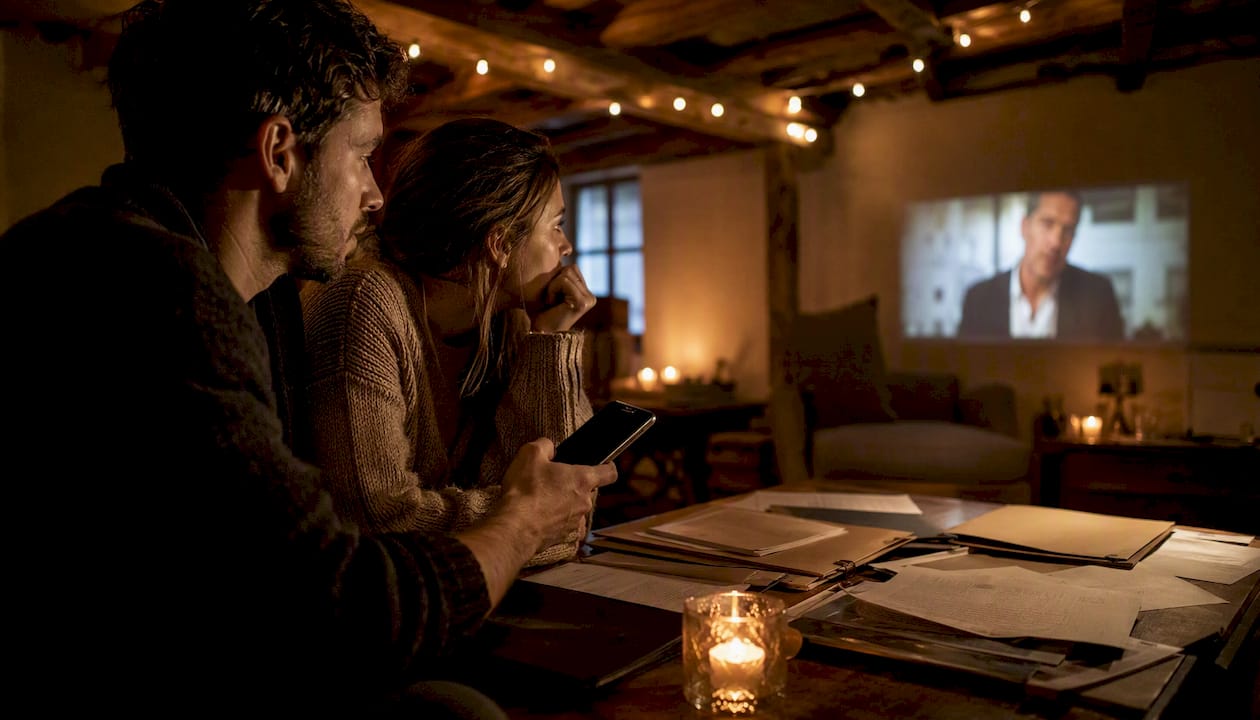

The atmosphere of your date night is not decoration. It is the invisible director of the entire evening, shaping how relaxed you feel, how long you talk, and how close you let yourself get. Research consistently shows that sensory environment, specifically lighting, sound, scent, seating, color, and temperature, shifts emotional state before a single word is spoken. Get those levers right, and the conversation flows naturally. Get them wrong and even the best intentions feel flat.
Here is what the evidence points to, up front:
- Lighting: Warm, dim light produces longer conversations and more open body language, according to experimental research on lighting and social behavior.
- Color and décor: A 162-participant study found monochromatic palettes and plain décor significantly increased perceived sociability in romantic dining settings.
-
Sound: Low-volume, slow-tempo music reduces ambient noise and lowers physiological arousal to a level that encourages disclosure.
- Privacy: Fewer distractions, including phones, crowds, and harsh overhead light, reduce self-consciousness and let both people be present.
- Conversation: Several studies on first dates found that meaningful conversation can produce closeness even in a plain room, though comfortable spaces were recalled more warmly a month later.
The practical takeaway: atmosphere amplifies connection, but it works best as a stage, not a substitute for genuine engagement. For couples who want a high-impact at-home option, an immersive Investigation like Murder in Prague combines cinematic atmosphere with tactile evidence and collaborative storytelling, creating the kind of shared focus that deepens intimacy naturally.
Key Takeaways
Atmosphere shapes date-night connection by lowering performance pressure, extending conversation, and creating the sensory conditions where vulnerability and closeness come naturally.

How atmosphere influences emotions, attraction, and conversation
The role of atmosphere in date night goes deeper than aesthetics. Environment shapes emotion through three overlapping psychological mechanisms: affect regulation, arousal level, and social cueing.
Affect regulation is the most immediate. When you walk into a warm, softly lit room with a low hum of music, nervous system reads the signals as "safe, calm, welcome." That shift happens before you consciously register it. A harsh, bright, noisy space does the exact opposite, keeping you slightly on guard, which is the enemy of vulnerability.
Arousal level describes your physiological readiness to engage. Moderate arousal, the kind produced by a comfortable temperature, a gentle playlist, and pleasant scent, is the sweet spot for conversation. Too low and the evening feels sleepy; too high (loud music, bright lights, a crowded room) and attention fragments.
Social cueing is subtler. Seating that places two people at the same height, close enough to see facial expressions clearly, encourages eye contact and facial mimicry, the unconscious mirroring that builds rapport. A table that is too wide, or chairs angled away from each other, physically interrupts that feedback loop.
Together, these mechanisms explain why two people in a well-designed space tend to disclose more, laugh more easily, and feel more attracted to each other, not because the room is magic, but because it removes friction. The lighting proof-of-concept study found that dim, warm white light specifically produced more relaxed posture and longer conversations between couples, which is a behavioral outcome, not just a mood preference.
Three outcomes that shift when atmosphere is right:
- More disclosure: Lower arousal and reduced self-consciousness make personal sharing feel less risky.
- Longer conversations: Comfortable seating and low ambient noise remove the urge to wrap up and leave.
- Easier physical closeness: Warmth, soft textures, and proximity cues make touch feel natural rather than deliberate.
The atmospheric elements that actually move the needle
Every sensory lever below has evidence behind it. The goal is not to deploy all of them at once, but to choose two or three that complement each other and let them do the work quietly.
Lighting
Warm, dim, directional light is the single highest-impact change you can make. Interviewed restaurant designers consistently name soft light at eye level, table candles and low-hung pendants rather than overhead fixtures, as the defining feature of an intimate space. Avoid cool-white or daylight-spectrum LEDs entirely for evening dates; they read as clinical and flatten facial warmth. Swap them for bulbs in the 2700K–3000K range, or simply use candles.
Sound and music
Volume matters more than genre. Music playing at a conversational background level, roughly 60–65 decibels, masks distracting ambient noise without competing with speech. Slow to mid-tempo tracks in the 60–90 BPM range keep energy calm without putting either person to sleep. A curated 20-song playlist avoids the jarring interruption of shuffle surprises and signals that you planned the evening.
Color and décor
The 162-participant study on interior design and social dining found that monochromatic color schemes and plain décor produced significantly higher sociability scores than busy, multi-color environments. The practical read: clear the clutter, stick to one or two tones, and add texture through soft furnishings rather than visual complexity.
Seating and layout
Face-to-face seating works well for conversation-focused evenings; side-by-side works for shared activities. The key variable is distance. Chairs or cushions placed slightly closer than your default "polite" distance create a subtle invitation to lean in. Seat height matters too: when both people are at the same eye level, the dynamic feels equal and open. Avoid hard, upright chairs for long evenings; physical comfort directly predicts positive date outcomes, according to Psychology Today's synthesis of first-date research.
Scent and food
Scent is processed by the limbic system, the brain's emotional center, faster than any other sense. A subtle, clean fragrance in the room, not a heavy candle that dominates, primes a positive emotional state before the date begins. Shared plates and finger foods encourage approachability and create small moments of physical coordination that build comfort.
Temperature and tactile cues
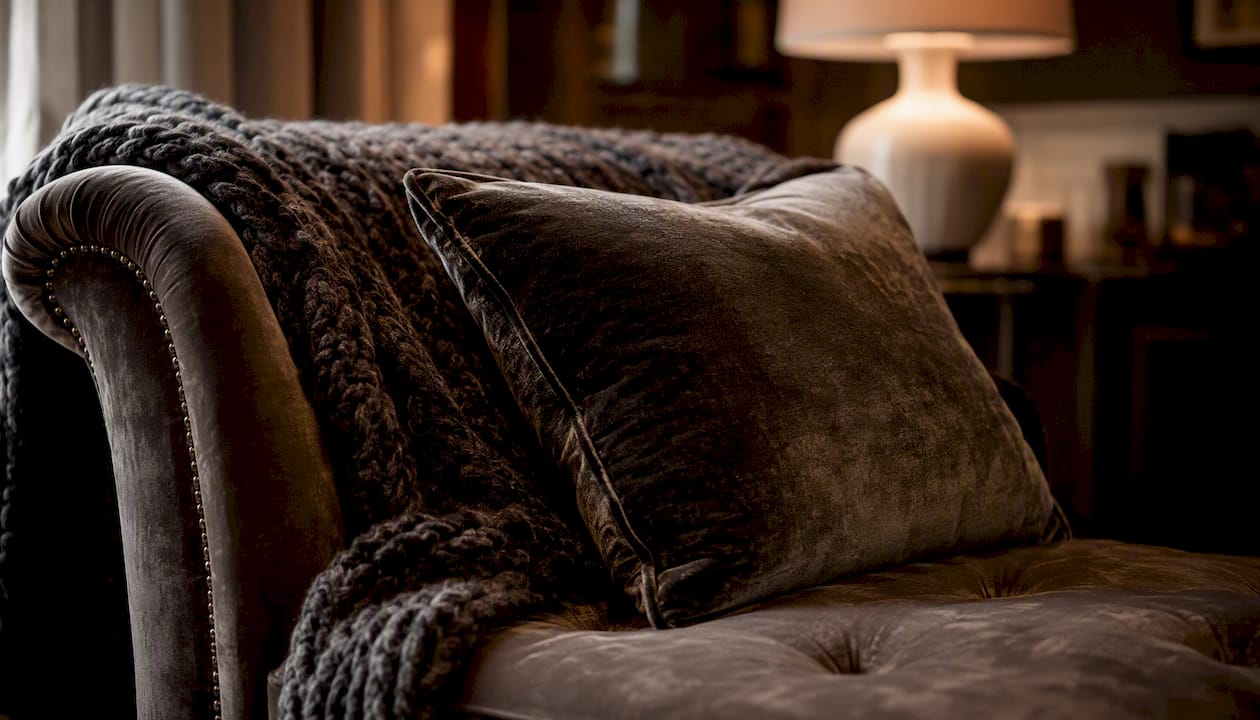
A room that is slightly cool, around 68–70°F, gives both people a natural reason to move closer or share a throw blanket. Soft textiles on seating, a velvet cushion, a knit throw, signal comfort and encourage lingering. Hard surfaces and cold materials do the opposite.
Privacy and distraction control
Self-consciousness is the enemy of intimacy. A simple phone-pause agreement, a corner table rather than a central one, and timing your reservation to avoid peak-crowd noise all reduce the feeling of being observed. At home, closing a door and dimming notifications costs nothing and changes everything.
Pro Tip: Don't try to activate all six levers at once. Pick lighting plus one other (sound or scent) and let those two carry the evening. Adding more cues beyond three tends to feel staged rather than natural.

How to set a romantic atmosphere at home, from arrival to wind-down
A well-paced home date does not require a dramatic reveal. It requires a sequence of small, deliberate choices that build on each other across the evening.
Before the date (60–15 minutes out)
- Swap overhead lights for lamps or candles; test the effect by sitting in both seats.
- Do a quick surface clear: counters, coffee table, and any visible clutter that signals "regular Tuesday."
- Choose your scent: one candle or a light room spray, lit or applied 20 minutes before arrival so it settles.
- Cue your playlist and set the volume before your partner arrives; adjusting it mid-greeting breaks the mood.
- Set the temperature to 68–70°F and place a soft throw within reach.
- Arrange seating slightly closer than usual and, if you are doing a shared activity, position it so both of you face the same direction.
Arrival to appetizer
- Greet your partner at the door, take their coat, and offer water or a drink before anything else. This two-minute ritual signals "you are the priority tonight" and immediately lowers social tension.
- Resist checking your phone for the first 20 minutes. That window sets the tone for the whole evening.
- Keep the lighting soft from the start; do not plan to dim it later as a "moment," because the transition can feel theatrical.
Main course to dessert
- Shift the playlist energy slightly: move from calm background tracks to something with a little more warmth and rhythm, still conversational volume.
- Introduce a shared tactile object. This could be a printed question card, a handwritten note, or, if you are doing an at-home Investigation, the physical evidence envelope that comes with the Murder in Prague Detective Kit. Holding something together, literally, creates a shared focal point that pulls attention inward rather than outward.
- Ask one deeper question. Not "how was your week?" but something that requires a real answer.
Post-dessert wind-down
- Lower the light one more notch, either by blowing out one candle or dimming a lamp.
- Shift to slower music, something without a strong beat.
- Build in a deliberate pause: sit without an agenda for a few minutes. Physical closeness, a hand on an arm, leaning in, tends to happen naturally when the environment stops demanding attention.
Pro Tip: A physical prop creates shared curiosity more reliably than a conversation topic alone. A printed clue, an evidence envelope, or even a handwritten question card gives both people something to hold, examine, and react to together, which is the fastest path to playful collaboration.
How to evaluate a restaurant's atmosphere before you book
Choosing the right venue is one of the most underrated parts of planning a date. A beautiful restaurant with the wrong acoustic design or lighting scheme can undermine even the best conversation.
What to check online before booking:
- Look at photos taken at night, not the daytime shots most restaurants feature. Night photos reveal the actual lighting quality.
- Read reviews that mention noise level specifically. Words like "lively" and "buzzing" are code for loud.
- Check whether the restaurant has booths or corner tables available on request.
- Look at table spacing in photos. Tables pushed close together in a packed room eliminate the privacy that makes intimate conversation possible.
Questions to ask when you call:
- "Do you have a quieter section or a corner booth?" Most restaurants will accommodate this if asked directly.
- "What time does the room tend to fill up?" Booking 30 minutes before peak hour often means you get the space before the noise builds.
Red flags to avoid:
- Harsh overhead LED lighting with no warm supplemental sources.
- Live music on a first-attempt date, unless you both already love that venue's specific act.
- Restaurants designed primarily for visual spectacle, open kitchens with theater lighting, dramatic installations, because the room competes with your conversation for attention.
- Very large tables that put two people far apart.
A note on natural light: For early dates or afternoon meetups, natural light can reduce stress and support positive first impressions, For anniversaries or slow dinners, warm artificial light tends to work better because it narrows the perceptual field and focuses attention on the person across from you.
High-impact atmosphere fixes you can do in 5–20 minutes
Not every date gets 60 minutes of prep. These changes take almost no time and cost very little.
Five-minute fixes:
- Switch off overhead lights and turn on one or two lamps with warm bulbs.
- Start a slow-tempo playlist at background volume before your partner arrives.
- Move your seating 6 inches closer together than its default position.
- Tuck a soft throw over one chair or the couch.
- Put a shared dessert on one plate instead of two.
Under-$20 upgrades:
- A set of warm-white string lights draped along a shelf or window frame costs under $15 and transforms a room's light quality immediately.
- A single stem in a small vase beats a full floral arrangement for intimacy; it reads as thoughtful rather than performative.
- Soy or beeswax candles in a neutral scent (sandalwood, clean linen, or unscented) are widely available for under $10 and last multiple evenings.
Last-minute scent tricks:
- A small bowl of fresh citrus peel, lemon or orange, placed near the seating area adds brightness without the heaviness of a candle.
- One light spritz of a subtle, clean fragrance on a fabric surface, not directly into the air, lingers longer and feels less aggressive.
- Avoid layering multiple scents. One source, one note.
Micro-rituals that add immediacy:
- A handwritten note left on the table before your partner sits down.
- A printed question prompt placed face-down as a conversation starter.
- A short, playful "case file" you hand your partner at the start of the evening, a few printed clues about a mystery you invented together, or the opening envelope from a structured at-home mystery party night.