
A story-led family experience is a narrative-driven, cinematic at-home investigation where families, couples, or small friend groups cooperatively solve a murder mystery using movie-quality video, realistic physical evidence, and an interactive companion app. Think of it as a self-paced interactive story you inhabit rather than watch — one that typically runs 2–5 hours and requires nothing more than your living room, a screen, and the people you want to spend a genuinely memorable evening with.
Key Takeaways
A story-led family investigation is the format that turns a living room into a crime scene — and the quality of the components determines whether it feels cinematic or forgettable.

What does a story-led investigation actually feel like at home?
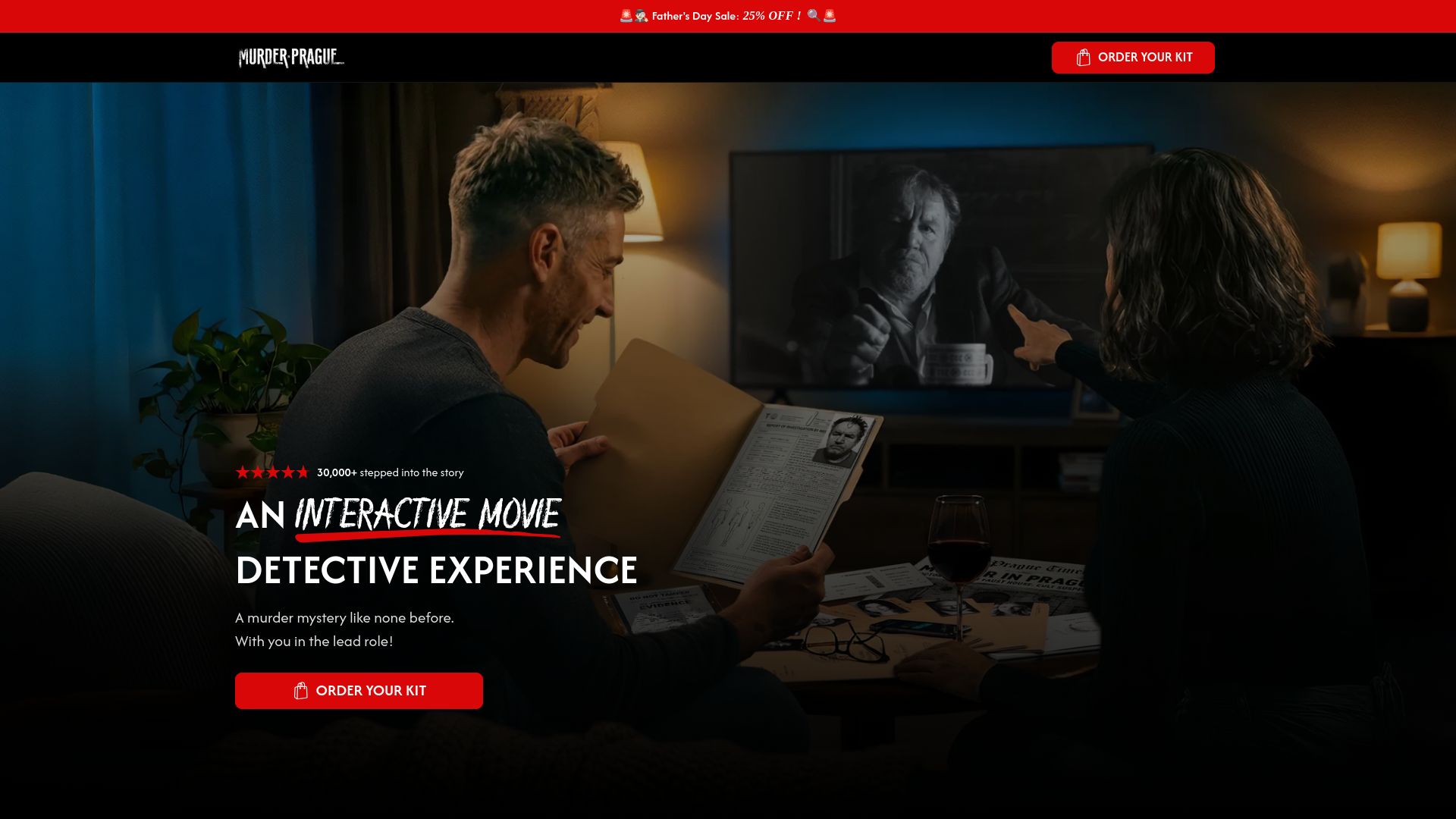
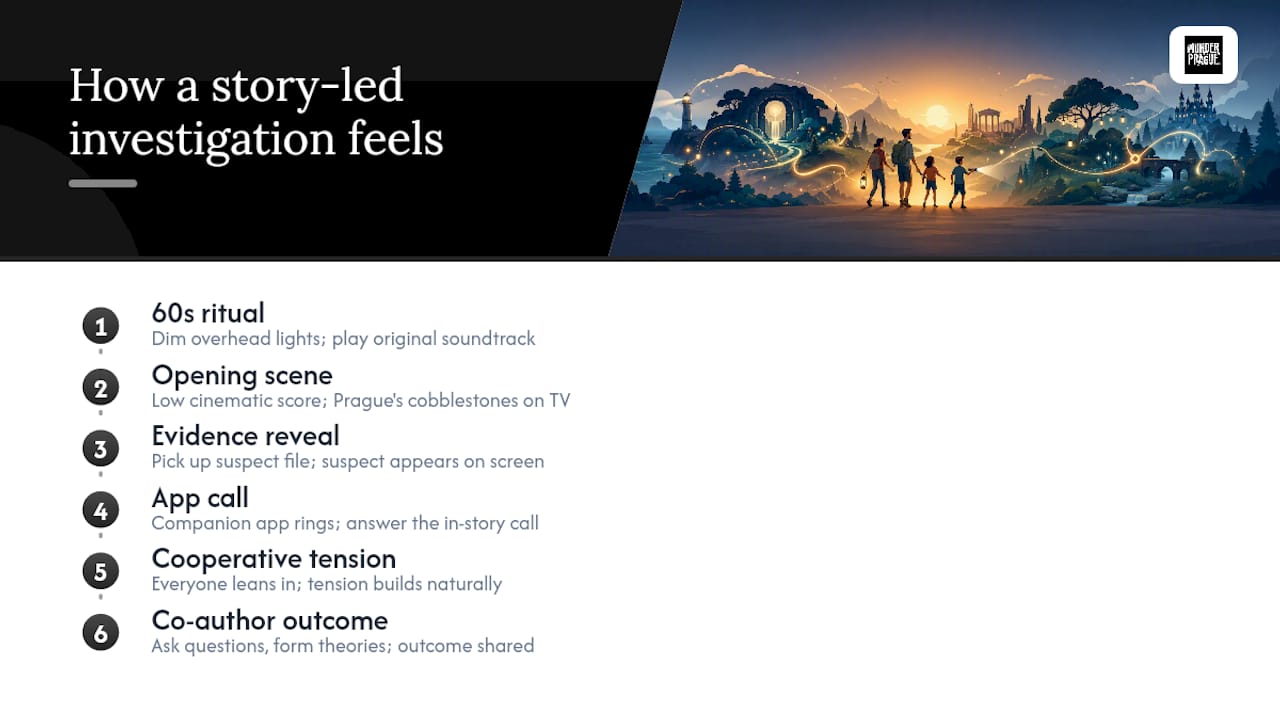
The soundtrack hits first. A low, cinematic score fills the room as the opening scene plays on your TV — Prague's cobblestones slick with rain, a detective's voicemail crackling through the speakers. Then someone at the table picks up a suspect's personnel file, and right on cue, that suspect appears on screen. The tension in the room shifts immediately. You're not watching a thriller anymore. You're inside one.
That sensory layering is what separates a premium story-led investigation from anything else you could do on a Friday night. Believable actors deliver gripping performances. Physical artifacts — handwritten notes, bank records, photographs — feel genuinely handled and worn. When the companion app rings with an in-story call from a witness, someone has to answer it while everyone else leans in. The cooperative tension builds naturally, without a host scripting every beat.
Immersive mysteries succeed precisely because participants don't just observe — they ask questions, form theories, and co-author the outcome, which is why the experience lingers long after the reveal.
Pro Tip: Dim the overhead lights and let the investigation's original soundtrack play before you open the evidence box. That 60-second ritual signals to everyone in the room that the story has begun — and it costs nothing.
What components make a cinematic, story-led investigation premium?
The format earns its "cinematic" label through five interlocking elements, each doing a specific job.

The physical evidence box is where the format earns its credibility. Holding a suspect's phone records while their face fills the screen creates a cognitive link no digital-only product can replicate. The companion app then extends that realism: you might hack into a victim's phone, cross-reference bank statements, or receive a text from a character mid-investigation. physical case-file formats use layered evidence, graduated hint systems, and modular materials so the investigation scales from two participants to a small group without losing momentum.
Good design means every clue does double duty — advancing the plot, suggesting a motive, or undermining a false lead. A narrative "spine" built around a core crime, motive web, and timeline ensures that triangulating across multiple artifacts, not finding one magic clue, secures the solution.
How does a typical investigation night unfold?
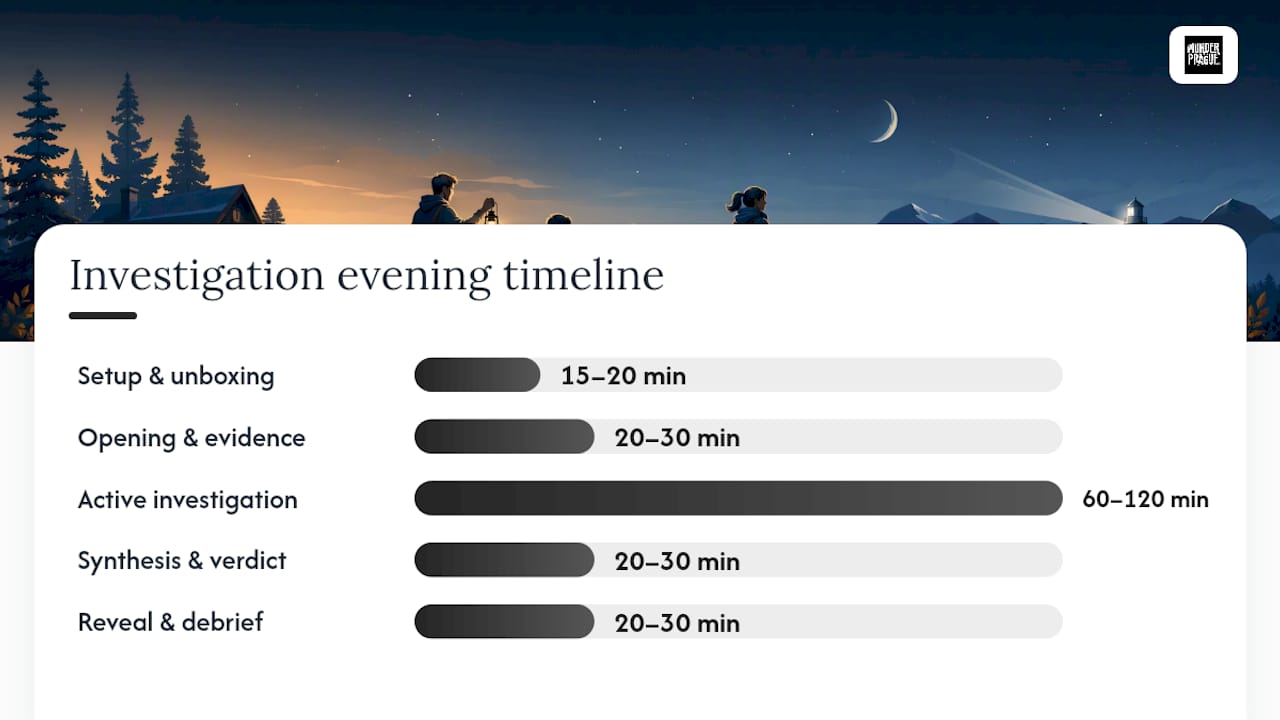
The format is cooperative and self-paced, which means no one is stuck as the host while everyone else plays. A standard session moves through five phases:
- Setup (15–20 min): Unbox materials, connect the app, arrange evidence on the table, and start the soundtrack.
- Opening scene (20–30 min): Watch the first cinematic segment together. Characters are introduced, the crime is revealed, and the first evidence drop lands.
- Active investigation (60–120 min): Examine physical artifacts, interact with the companion app, receive in-story calls, and build your suspect board. Hint tracks are available if the group gets stuck.
- Synthesis (20–30 min): Pool your findings, debate motives, and commit to a theory. This is usually the loudest, most energized part of the night.
- Reveal and wrap-up (20–30 min): Watch the final cinematic segment, check your verdict, and debrief.
Publishers typically list playtime at 2–5 hours with a best suited for small groups, though the format scales for larger gatherings when duplicate materials or role splits are used. For groups of six or more, splitting into two investigative teams with shared evidence works well — each team approaches the same case from a different angle, then compares conclusions at synthesis.
Who is this format for, and when does it shine?
Best fit:
- Families with teenagers who want a shared challenge that isn't a screen-staring contest
- Couples looking for a date night with genuine stakes and conversation
- Friend groups of 2–6 who enjoy true crime, escape rooms, or thriller films
- Small celebrations — anniversaries, birthdays, or low-key holiday gatherings
Worth a pause if:
- Your group includes children under 12 (most cinematic investigations carry a 16+ content rating for themes of violence, deception, or dark humor)
- You're hosting a large party table without duplicate kits — the intimacy of the evidence box breaks down at scale
For family-friendly play with younger teens, look for investigations with lighter thematic content and no graphic imagery. The format itself adapts well; it's the content rating, not the structure, that determines age suitability.
Why do families and couples love story-led investigations?
The social payoff is immediate and lasting. Cooperative problem-solving around a shared narrative creates structured conversation — the kind that doesn't happen over dinner or a movie. Everyone has a role, everyone holds evidence, and the group's collective reasoning determines the outcome.
The psychological dimension runs deeper than most people expect. Behavioral researchers report that "scary play" — engaging with fictional threats and suspenseful narratives — can help participants practice emotional coping strategies and may increase psychological resilience. The suspense of a well-crafted murder mystery isn't just entertaining; it's a low-stakes rehearsal for managing uncertainty together.
Shared suspense also creates durable memories. When your group debates the wrong suspect for twenty minutes, then watches the reveal prove you right (or spectacularly wrong), that moment becomes a story you retell. The investigation ends; the memory doesn't.
How do you pick a premium story-led family investigation?
Start with production quality and work outward. Here's what to look for — and what to avoid:
Green lights:
- Professionally filmed video with a recognizable cast and real locations
- A physical evidence box with authentic-feeling materials
- A companion app that adds interactivity, not just a PDF viewer
- A clear playtime estimate and content rating published upfront
- A hint system that nudges without spoiling
- Cooperative design so no one is stuck running the experience for everyone else
Red flags:
- Thin narrative with puzzles that don't connect to a coherent story
- No stated duration or age guidance
- Heavy host/GM prep required before the night begins
- Video that looks like a webcam recording — low-res footage breaks immersion immediately
High production values — clean cinematography, professional actors, and original soundtracks — are the features most reliably cited as increasing immersion. "Netflix-level footage" is a meaningful benchmark, not marketing language. If the trailer looks like a student film, the investigation will feel like one.
What Murder in Prague delivers as a cinematic investigation
Murder in Prague is a premium, cinematic interactive story that combines Netflix-level video, a physical evidence box, companion app interactivity, and an original soundtrack into a single, self-paced investigation shot on location in Prague with an award-winning cast.
The experience opens with a cinematic film segment that pulls you into a film-noir thriller. Your evidence box arrives with case files, photographs, recorded voicemails, and printed artifacts that feel genuinely handled. Mid-investigation, the companion app rings — a suspect is calling. You answer while someone else cross-references their bank records. The cooperative design means no one hosts; everyone investigates.
The narrative spine rewards triangulation across multiple clues rather than a single "aha" moment, which keeps the whole group engaged through the synthesis phase. Hint tracks are built in for groups that want momentum over mastery.
Content note: Murder in Prague carries mature themes consistent with a film-noir thriller — dark humor, deception, and stylized violence. It's best suited for groups 16 and older, or mature families with older teens. Price sits in the range of a movie ticket or two per person, delivering escape-room-level immersion without leaving the couch.
Setting up your investigation night: checklist and sample timeline
Setup checklist:
- Clear a table large enough to spread physical evidence
- Connect a TV or laptop for video segments and the companion app
- Download the app and test audio before guests arrive
- Set lighting to dim or lamp-only (overhead lights flatten the atmosphere)
- Queue the investigation's soundtrack as background before you open the box
- Choose non-greasy snacks — handling evidence with oily fingers is a real problem
Sample evening timeline:

A zero-prep cooperative approach combined with simple staging — lighting, soundtrack, and smart snack choices — produces high immersion with minimal host effort. The host doesn't need to memorize anything. Set the scene, press play, and investigate alongside everyone else.
Pro Tip: Assign one person to photograph the evidence board at the synthesis stage. Reviewing your reasoning after the reveal — especially when you were confidently wrong — is half the fun of the debrief.
What running your first investigation night actually feels like
The moment that surprises first-timers most isn't the reveal. It's the synthesis phase — twenty minutes of everyone talking over each other, pointing at different pieces of evidence, and building a theory that feels airtight until someone finds the one document that unravels it. That's the emotional core of a story-led investigation: collaborative reasoning under pressure, with a ticking narrative clock.
A common first-night worry is pacing — what if the group gets stuck and the energy drops? The hint system handles this without requiring anyone to step outside the story. Use the first hint freely; it's designed to nudge, not spoil. The investigation's momentum is more important than the satisfaction of solving it unaided.
The payoff, when the final cinematic segment plays and the truth lands, is the kind of shared reaction you don't manufacture. Someone was right. Someone was spectacularly wrong. Everyone has a story to tell about it afterward.